




With 60 years of experience, in the rolling industrial heartland of Bursa, a city lying in the foothills of Mount Uludag near the Sea of Marmara, long celebrated as Turkey’s cradle of automotive innovation, one company has steadily redefined the contours of modern mobility. Born in the mid-20th century and grown through decades of partnerships, reinvention, and bold engineering leaps, Karsan has evolved from a regional player into a global name synonymous with sustainable transport.
Today, as urban cities which are engulfed in pollution worldwide, seek clean energy and smarter transit, the Bursa-based pioneer Karsan automotive company stands at the crossroads of tradition and transformation – anchored in Turkish craftsmanship yet propelled by a vision of tomorrow’s urban journeys.
It was a tough journey how a visionary Turkish automotive enterprise evolved into a global innovator shaping the future of connected transport. Recognised for its outstanding market impact and commitment to sustainable mobility, the company was awarded the prestigious title of ‘Global Mobility Brand of the Year 2026’ by The Brands Review Magazine.
A global player in mobility
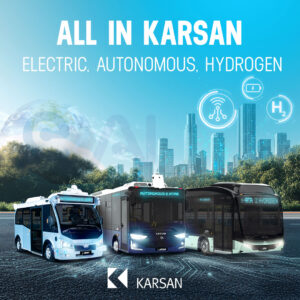
Today, Karsan is no longer simply a vehicle manufacturer; it is evolving into a mobility technology company. By combining electric, hydrogen and autonomous technologies under a single ecosystem, Karsan is helping cities address some of the most pressing challenges of urban transportation, including decarbonisation, accessibility and operational efficiency.
With vehicles operating in more than 20 countries and autonomous projects running across Europe and North America, Karsan is actively demonstrating how next-generation mobility solutions can move from pilot projects to real-world operations. This transition from manufacturing vehicles to delivering intelligent mobility solutions is at the heart of Karsan’s global growth strategy.
Impressive Product Portfolio
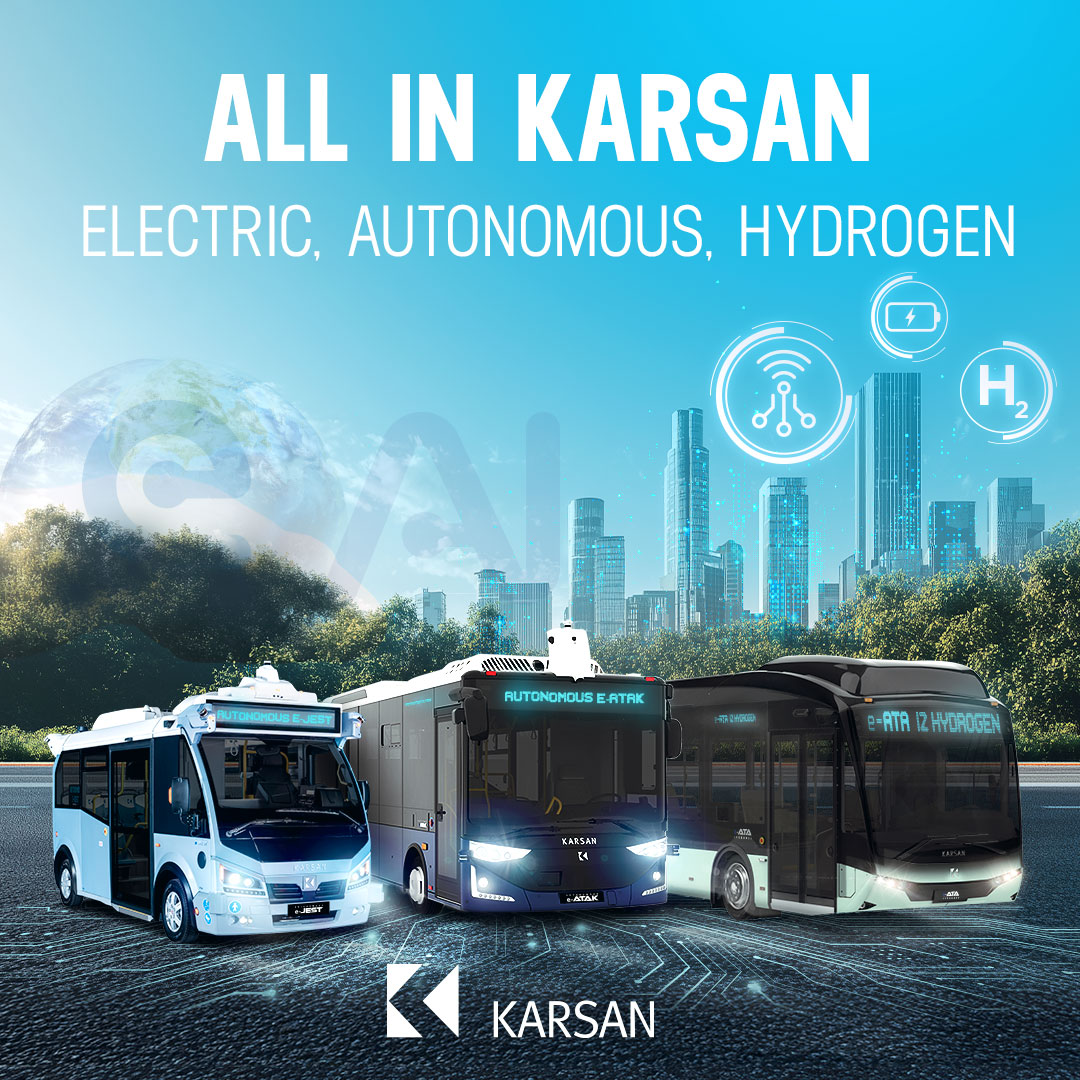
The company’s product portfolio reflects its evolution from conventional vehicles to cutting-edge mobility solutions. The Jest, introduced in 2013, was a compact minibus designed for urban transport. In 2018, it was electrified as the e-JEST, a milestone that positioned Karsan among the first in Europe to offer fully electric minibuses. The Atak, launched in 2014, followed a similar trajectory, becoming the e-ATAK in 2019. These models represent a strategic commitment to electrification, aligning Karsan with the global push toward zero-emission transport.
Building on this momentum, Karsan unveiled the e-ATA family in 2021, comprising 10m, 12m, and 18m fully electric buses designed for urban mass transit. The same year, in collaboration with ADASTEC, it introduced the Autonomous e-ATAK, a Level 4 driverless bus that began operating in real-world conditions. In 2022, the company expanded its portfolio further with the e-ATA Hydrogen, a hydrogen-powered bus offering extended range and faster refuelling, underscoring its commitment to diverse sustainable technologies. In 2025, Karsan launched the Autonomous e-JEST, bringing driverless capability to smaller urban vehicles.
Tyre Marks on Global Autobahns
Karsan’s global expansion has been equally impressive. In 2023, it became the first European bus manufacturer to enter the Japanese market with right-hand-drive e-JEST models, a significant achievement given Japan’s stringent standards and competitive landscape. The following year, it expanded into the UK with similar offerings. Today, Karsan’s vehicles operate across Europe, the Middle East, and Asia, with growing recognition in sustainable mobility markets. Karsan’s tyre marks on the global highways demonstrate the company’s ability to adapt its products to diverse regulatory environments and customer needs.
What differentiates Karsan today is its ability to integrate multiple future mobility technologies into commercially viable transportation solutions. While many manufacturers focus on a single transition pathway, Karsan has simultaneously invested in electrification, hydrogen fuel-cell technology and autonomous driving systems.
This multi-technology approach enables cities and operators to choose the most suitable solution for their specific operational requirements, positioning Karsan as a strategic mobility partner rather than solely a vehicle supplier.
Shaping the Future of Public Transportation
Looking ahead, Karsan aims to play a leading role in shaping the future of public transportation through connected, autonomous and zero-emission mobility ecosystems.
The company’s vision extends beyond manufacturing vehicles; it focuses on enabling smarter cities, reducing environmental impact and improving accessibility through technology-driven transportation solutions.
As urban populations continue to grow, Karsan sees autonomous public transportation, sustainable energy systems and data-driven fleet management as key pillars of future mobility.
Milestones in Motion
2013: Launch of Jest minibus
2018: e-JEST electrifies urban transport
2019: e-ATAK enters the mid-size electric bus market
2021: e-ATA family (10m, 12m, and 18m) + Autonomous e-ATAK
2022: Hydrogen-powered e-ATA Hydrogen
2025: Autonomous e-JEST
Conclusion
As the global mobility landscape undergoes its most significant transformation in decades, Karsan stands at the forefront of this change. With a proven electric product portfolio, pioneering autonomous operations, expanding hydrogen capabilities and a growing international footprint, the company is helping redefine how people move in cities.
More than a manufacturer, Karsan has become a global mobility brand that combines innovation, sustainability and operational expertise to shape the transportation systems of tomorrow.
From Europe to North America and from Japan to emerging mobility markets worldwide, Karsan continues to demonstrate that the future of public transportation is not a distant vision—it is already on the road.
Article received by email.